
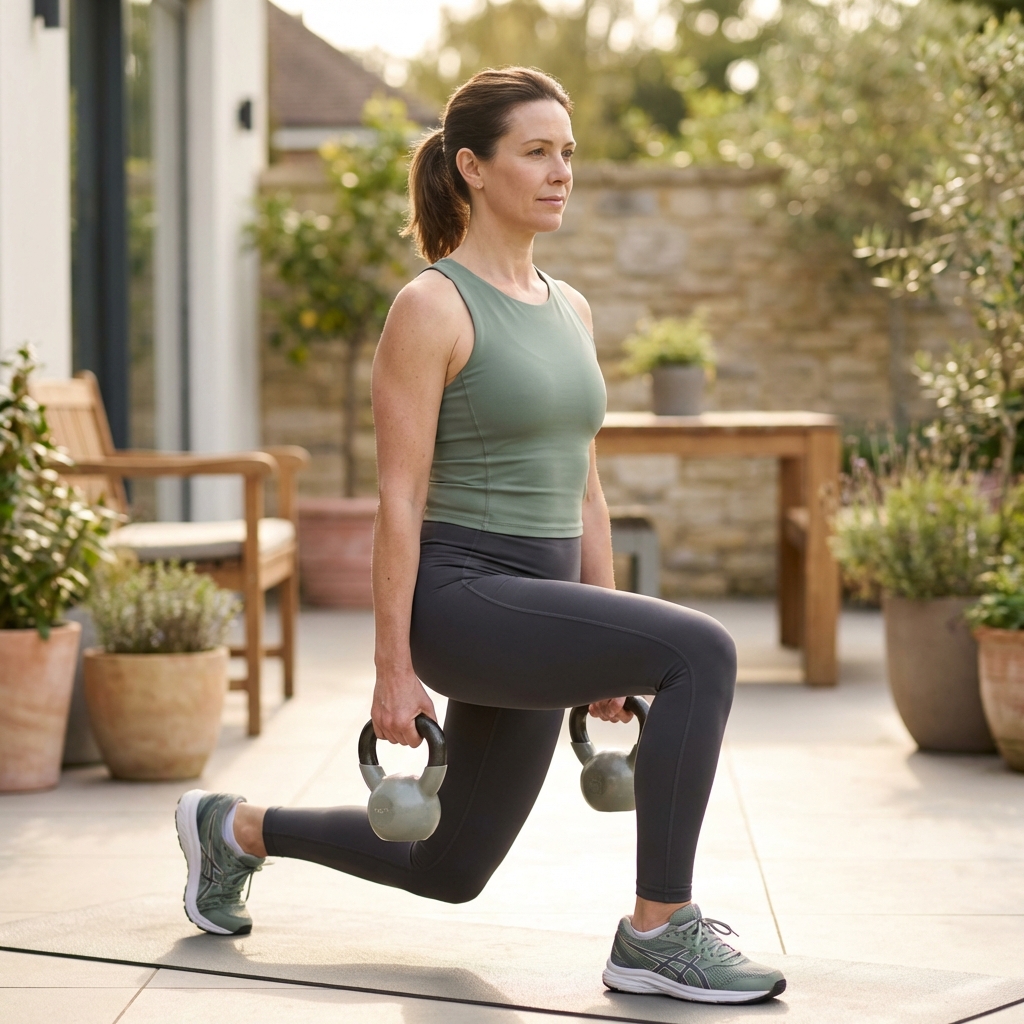
Strength Training in Midlife: Why “Doing More” Isn’t Always Better for Women Runners
Strength Training in Midlife: Why “Doing More” Isn’t Always Better for Women Runners
If you’re a midlife woman runner, you’ve probably heard this advice:
“You need to strength train more.”
And while strength training is important, many women find that adding more lifting doesn’t automatically make running feel better.
Instead, they notice:
Lingering soreness
Heavy or unresponsive legs
Inconsistent recovery
Runs that feel harder instead of stronger
That doesn’t mean strength training is the problem.
It means how strength is applied matters more in midlife.
Why Strength Training Feels Different in Midlife
As hormones shift, your body responds differently to load and recovery.
Changes in estrogen influence:
Muscle repair
Tendon stiffness
Nervous system sensitivity
Fuel utilization
This means your body has less tolerance for random or excessive load, even if you’ve been lifting for years.
More isn’t always better.
Better-timed and better-supported is.
When Strength Training Helps - and When It Backfires
Strength training works best for midlife runners when it:
Supports movement quality
Improves coordination and load transfer
Enhances recovery instead of competing with it
It tends to backfire when:
Volume is too high
Exercises are disconnected from running mechanics
Recovery inputs aren’t matched to training stress
This is why many runners feel strong in the gym but stiff or flat when they run.
Strength as Support, Not Punishment
In midlife, strength training should support running, not punish your system.
That means:
Prioritizing foot-to-core connection
Using unilateral and stability-focused patterns
Respecting nervous system recovery
Leaving the gym feeling better, not depleted
When strength is applied this way, runners often report:
Easier warm-ups
More consistent runs
Less post-run stiffness
Greater confidence in their bodies
A Smarter Way Forward
You don’t need to stop strength training.
You don’t need to do more either.
You need strength that respects where your body is now.
That’s not a step backward — it’s how experienced runners adapt and keep moving forward.
References
Hackney AC. Hormonal changes and neuromuscular adaptations in midlife women. Sports Medicine.
Tenforde AS et al. Load management and recovery considerations for female endurance athletes. Current Sports Medicine Reports.
Nattiv A et al. Integrating strength training into endurance programs for women. British Journal of Sports Medicine.